
July 29, 2026
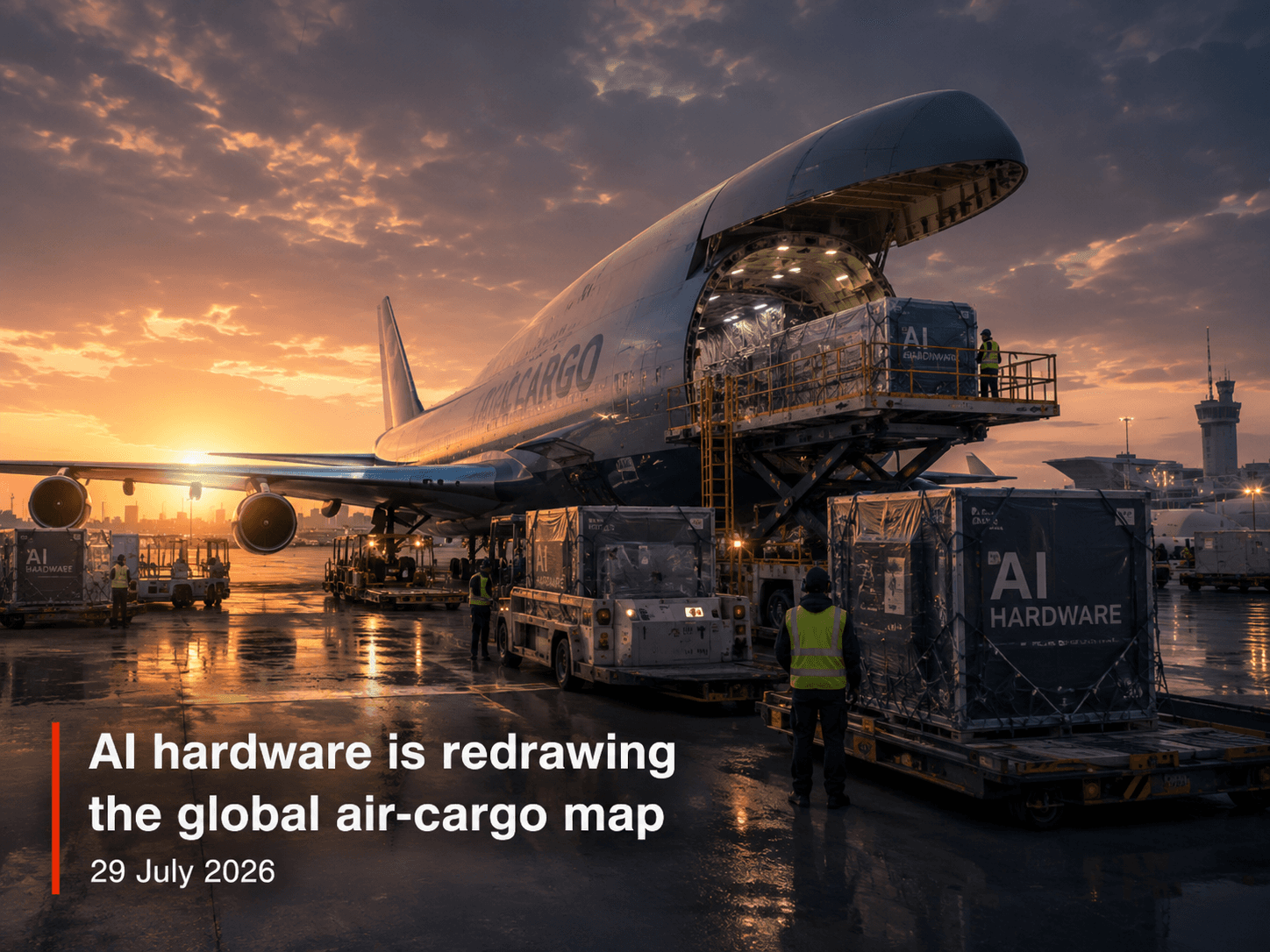
AI hardware is redrawing the global air-cargo map
The expansion of artificial intelligence is having an unexpected impact well beyond the technology sector: it is changing the global air-cargo market.
According to reporting published on 29 July 2026, airlines are reorganising freight networks around semiconductor and AI-hardware manufacturing hubs as traditional cross-border e-commerce growth slows. Korean Air reported that its cargo revenue increased by 46% during the second quarter, supported by demand for AI chips, server racks and other data centre infrastructure.
The nature of this freight is particularly important.
The International Air Transport Association estimated that AI-related products represented only 7% of air-cargo volume in 2025 but accounted for 53.5% of its value. Unlike many consumer parcels, advanced processors, semiconductor equipment and server infrastructure are highly valuable, technically sensitive and frequently required within strict project schedules.
Manufacturing and assembly activity is also shifting freight patterns. Japan, South Korea and Taiwan remain central to semiconductor production, while Vietnam, Malaysia, Thailand and Singapore are becoming increasingly important locations for AI-server manufacturing and assembly. Taipei’s air-cargo infrastructure reportedly reached capacity during July as semiconductor and AI shipments increased.
A different type of logistics requirement
Moving AI infrastructure is not the same as moving ordinary consumer goods.
Operators may need to provide:
Enhanced cargo security and chain-of-custody controls.
Specialist packaging and vibration protection.
Temperature and humidity monitoring.
Priority customs-clearance processes.
Carefully planned loading and weight distribution.
Contingency capacity for time-critical project deliveries.
End-to-end tracking between manufacturers and data centre sites.
A delay involving a relatively small volume of equipment can hold up the commissioning of a much larger data centre project. This means the value of logistics performance cannot be measured solely in freight cost. Reliability, visibility and risk reduction may be considerably more important.
The development also illustrates how closely connected the data centre and logistics sectors are becoming. Growth in computing capacity creates demand not only for electricity and construction, but also for secure, specialised and time-sensitive global supply chains.
Logistics providers that understand these requirements, and can communicate directly with data centre developers, equipment manufacturers and commissioning teams, will be best positioned to capture the opportunity.
At ARCO Management & Consultants, we help businesses evaluate changing supply-chain requirements, identify operational risks and build delivery models suited to complex and high-value projects.
Latest News